
Daily Routines Vocabulary PDF: A Comprehensive Guide
Discover a valuable resource for language learners! This guide focuses on essential vocabulary for describing everyday activities‚ conveniently compiled into a PDF format.
It covers routines from waking up to bedtime‚ including school‚ work‚ and leisure‚ offering a structured approach to mastering daily life expressions.
The PDF includes pictures to aid comprehension‚ making it ideal for visual learners and beginners‚ with 24K views and 3 pages of content.
Embarking on a journey to learn a new language often begins with understanding the fundamentals of everyday life. Daily routine vocabulary forms a cornerstone of practical communication‚ enabling you to articulate your own habits and comprehend those of others. This PDF guide serves as an introductory resource‚ meticulously curated to provide learners with a comprehensive overview of terms associated with typical daily activities.
From the moment you wake up and begin personal hygiene tasks – like brushing teeth and taking a shower – to the responsibilities of going to school or work‚ and finally‚ preparing for bed‚ this vocabulary is universally relevant. The PDF doesn’t just list words; it contextualizes them within a structured daily routine‚ enhancing retention and practical application.
Furthermore‚ it encompasses household chores like cleaning and cooking‚ alongside leisure pursuits‚ offering a holistic representation of a typical day. This resource‚ as evidenced by its 24K views‚ is designed to be accessible and beneficial for learners of all levels‚ providing a solid foundation for fluency.
Why Learn Daily Routine Vocabulary?
Mastering daily routine vocabulary is crucial for effective communication in any language. It’s not merely about reciting words; it’s about gaining the ability to discuss your life‚ understand others‚ and navigate everyday situations with confidence. This PDF resource directly addresses this need‚ providing a practical toolkit for learners.

Being able to articulate your morning routine – from waking up to breakfast – fosters connection and understanding. Similarly‚ discussing school or work activities‚ or even simple household chores like cleaning‚ builds rapport and facilitates interaction. The PDF’s focus on these common experiences makes learning relevant and engaging.
Moreover‚ understanding routine vocabulary unlocks access to a wealth of authentic language materials. With 24K views‚ this PDF proves its value in bridging the gap between textbook learning and real-world application‚ enabling you to comprehend conversations‚ media‚ and literature with greater ease and accuracy.
The Importance of a PDF Format
Choosing a PDF format for daily routine vocabulary offers significant advantages for language learners. PDFs are universally accessible‚ viewable on virtually any device – computers‚ tablets‚ and smartphones – without requiring special software. This ensures learning can happen anytime‚ anywhere.
The PDF’s portability is invaluable; you can easily download and save the 3-page document for offline access‚ eliminating reliance on an internet connection. This is particularly useful during commutes or travel. Furthermore‚ PDFs maintain formatting consistency‚ ensuring the vocabulary and accompanying pictures appear as intended‚ regardless of the viewing device.
With 24K views‚ this resource’s popularity highlights the demand for convenient‚ reliable learning materials. The PDF format facilitates easy printing for physical study‚ annotation for personalized learning‚ and sharing with fellow students‚ making it a versatile and effective tool for vocabulary acquisition.

Morning Routine Vocabulary
Explore essential terms for starting your day! This section details vocabulary related to waking up‚ brushing teeth‚ showering‚ getting dressed‚ and breakfast‚ found within the PDF.
Waking Up & Getting Out of Bed
Begin your day with the right words! This section‚ detailed in the daily routines vocabulary PDF‚ focuses on expressions related to the start of the morning. Key vocabulary includes “wake up‚” describing the act of ceasing sleep‚ and “get out of bed‚” signifying leaving your sleeping space.
You’ll also encounter phrases like “alarm clock‚” the device used to signal wake-up time‚ and “hit the snooze button‚” a common habit for delaying getting up. The PDF resource likely illustrates these actions with helpful pictures‚ aiding comprehension for visual learners.
Further terms might include “morning person” (someone who feels energetic in the morning) and “night owl” (someone who prefers to stay up late). Understanding these nuances allows for more descriptive and accurate communication about your personal morning experience‚ as outlined in the 3-page document.
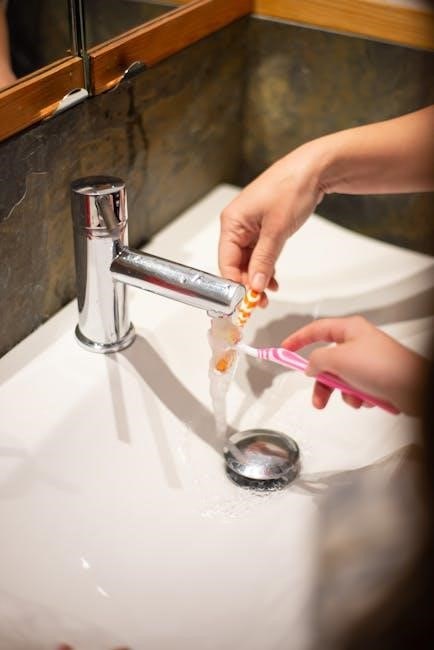
Personal Hygiene ⎯ Brushing Teeth
Maintain a sparkling vocabulary alongside a sparkling smile! The daily routines vocabulary PDF dedicates specific terms to personal hygiene‚ starting with the essential act of “brushing teeth.” You’ll find words like “toothbrush‚” the tool used for cleaning‚ and “toothpaste‚” the flavored paste applied to the brush.
The resource likely includes verbs such as “scrub‚” “rinse‚” and “spit‚” detailing the actions involved in the process. Expect to see related vocabulary like “dental floss‚” used for cleaning between teeth‚ and “mouthwash‚” for freshening breath.
The PDF‚ with its pictures‚ will likely demonstrate proper technique. It may also include phrases like “twice a day” (recommended brushing frequency) and “visit the dentist‚” emphasizing preventative care. Mastering this vocabulary‚ as presented in the 3-page document‚ is crucial for discussing health and daily habits.
Personal Hygiene ⎯ Taking a Shower
Refresh your language skills with vocabulary centered around “taking a shower”! The daily routines vocabulary PDF provides essential terms for this crucial hygiene practice. Expect to encounter words like “shower” itself‚ “shampoo” for hair cleaning‚ and “body wash” or “soap” for cleansing the skin.
The resource will likely include verbs such as “wash‚” “lather‚” and “rinse‚” describing the actions involved. Related vocabulary might encompass “towel” for drying off‚ “conditioner” for hair care‚ and “loofah” or “washcloth” for exfoliation.
The PDF‚ enhanced with pictures‚ will visually demonstrate the process. It may also feature phrases like “hot water” or “warm water” and “showerhead”. Learning this vocabulary‚ as detailed in the 3-page document‚ is vital for discussing personal care routines and daily habits effectively.
Getting Dressed
Enhance your vocabulary related to “getting dressed” with this daily routines vocabulary PDF! This section focuses on the clothing items and actions involved in preparing for the day. You’ll find terms for various garments like “shirt‚” “pants‚” “dress‚” “socks‚” and “shoes”.
Essential verbs include “put on‚” “wear‚” “zip up‚” and “button‚” describing the act of dressing. The PDF may also include vocabulary for accessories such as “belt‚” “hat‚” and “jewelry”. Expect to see descriptions of different types of clothing – “formal wear‚” “casual clothes‚” or “sportswear”.
The resource‚ boasting 24K views‚ likely utilizes pictures to visually represent the clothing items. It’s a practical section for learners aiming to describe their daily attire and understand conversations about fashion‚ all within the 3-page document.
Breakfast Vocabulary
Expand your linguistic toolkit with breakfast-related terms from this daily routines vocabulary PDF! This section details the foods and actions associated with the morning meal. Expect to encounter words for common breakfast items like “cereal‚” “toast‚” “eggs‚” “bacon‚” “fruit‚” and “yogurt”.
Key verbs include “eat‚” “drink‚” “cook‚” and “prepare‚” describing the process of having breakfast. The PDF may also feature vocabulary for beverages such as “coffee‚” “tea‚” and “juice”. You’ll likely find descriptions of breakfast styles – “continental breakfast” or a “full English breakfast”.
Given the 24K views and 3 pages‚ the resource probably incorporates pictures to illustrate the food items. It’s a useful section for learners wanting to discuss their morning meals and understand related conversations‚ enhancing their daily communication skills.

School/Work Routine Vocabulary
Learn terms for navigating academic or professional life! This PDF section covers transportation‚ activities‚ and lunchtime‚ vital for describing a typical day.
Going to School/Work ⎯ Transportation
Mastering vocabulary related to getting to school or work is crucial for describing your daily routine. A comprehensive PDF guide will include essential terms for various modes of transport. Think about how you typically commute – do you walk‚ cycle‚ or perhaps take the bus?
The PDF should cover common phrases like “catch the train‚” “drive to work‚” or “ride a scooter.” It’s also helpful to learn vocabulary related to traffic‚ such as “traffic jam‚” “rush hour‚” and “public transportation.” Consider words describing the journey itself – “commute‚” “travel‚” and “journey.”
Furthermore‚ the PDF might include terms for specific locations like “bus stop‚” “train station‚” or “parking lot.” Understanding these terms allows you to confidently discuss your daily commute and understand conversations about transportation. Visual aids‚ like pictures of different transport methods‚ can greatly enhance learning and retention‚ as seen in the referenced PDF with pictures.
School/Work Activities
A robust daily routines vocabulary PDF must dedicate a section to activities performed during school or work hours. This includes verbs describing what you do – study‚ learn‚ teach‚ work‚ collaborate‚ and present. Nouns are equally important: lesson‚ project‚ meeting‚ report‚ and assignment.
The PDF should also incorporate vocabulary related to the environment – classroom‚ office‚ laboratory‚ and conference room. Consider phrases like “take notes‚” “hand in homework‚” “attend a meeting‚” or “complete a task.”
Expanding beyond basic terms‚ a comprehensive guide might include vocabulary for specific subjects (math‚ science‚ history) or job roles (engineer‚ teacher‚ doctor). The referenced PDF outlines a typical daily routine‚ and this section builds upon that foundation‚ providing the language needed to detail what fills those routine hours‚ enhancing communication skills.
Lunchtime Vocabulary
A well-structured daily routines vocabulary PDF needs a dedicated section for lunchtime‚ a common and relatable daily event. Essential verbs include eat‚ drink‚ order‚ and share. Key nouns are sandwich‚ salad‚ soup‚ drink (water‚ juice‚ soda)‚ plate‚ and cutlery.
The PDF should also feature phrases like “have lunch‚” “pack a lunch‚” “eat out‚” and “grab a bite.” Consider vocabulary related to locations – cafeteria‚ restaurant‚ break room. Describing what you eat is crucial: healthy meal‚ fast food‚ vegetarian option.
Expanding the vocabulary‚ include terms for social interaction during lunch – chat with colleagues‚ catch up with friends. The source PDF details a typical daily routine‚ and this section enriches that routine with specific lunchtime language‚ improving conversational fluency and practical vocabulary usage.

Afternoon & Evening Routine Vocabulary
Explore vocabulary for post-work/school activities! This PDF section details hobbies‚ chores‚ and relaxation‚ covering leisure‚ cleaning‚ and cooking terms for a complete daily picture.
Afternoon Activities ⸺ Hobbies & Leisure
Dive into a world of enriching afternoon pastimes! The daily routines PDF provides essential vocabulary for describing hobbies and leisure activities‚ expanding your ability to articulate how you spend your free time.
Learn terms for common pursuits like reading a book‚ watching television‚ playing sports (basketball‚ soccer‚ tennis)‚ listening to music‚ painting‚ or gardening. The resource also includes phrases for meeting friends‚ going to the cinema‚ or visiting museums.
Expand your descriptive skills with words related to relaxation‚ such as taking a nap‚ spending time outdoors‚ or simply unwinding at home. This section aims to equip learners with the language needed to discuss their personal interests and recreational choices‚ fostering more engaging conversations about daily life. The PDF’s visual aids further enhance comprehension and retention of these valuable vocabulary items.
Household Chores ⎯ Cleaning
Master the vocabulary for maintaining a tidy home! The daily routines PDF offers a comprehensive list of terms related to cleaning‚ enabling you to discuss household responsibilities with confidence.
Discover words for essential tasks like sweeping the floor‚ vacuuming the carpet‚ mopping the tiles‚ dusting furniture‚ and washing dishes. The resource also includes terms for cleaning the bathroom (toilet‚ sink‚ shower)‚ making the bed‚ and doing laundry (washing‚ drying‚ folding).
Enhance your understanding with phrases describing cleaning supplies – detergent‚ bleach‚ sponge‚ cloth – and actions like scrubbing‚ wiping‚ and tidying up. This section is designed to help learners articulate their contributions to household upkeep and understand instructions related to cleaning tasks. The PDF’s clear presentation and potential for visual support make learning these practical terms efficient and effective.
Household Chores ⎯ Cooking
Expand your vocabulary related to food preparation with this section of the daily routines PDF! It provides essential terms for discussing cooking and kitchen activities‚ empowering you to describe your culinary involvement.
Learn words for common cooking methods: baking‚ frying‚ boiling‚ grilling‚ and roasting. The resource also covers essential kitchen tools – knife‚ pan‚ pot‚ oven‚ blender – and ingredients like vegetables‚ meat‚ fruit‚ and spices.

Discover phrases for describing cooking actions: chopping‚ mixing‚ stirring‚ peeling‚ and seasoning. You’ll also find vocabulary for meal preparation stages – planning meals‚ grocery shopping‚ and setting the table. This section aims to equip learners with the language needed to discuss recipes‚ cooking preferences‚ and their role in meal creation‚ making the PDF a valuable tool for everyday communication.
Dinner Vocabulary
Enhance your ability to discuss the evening meal with this focused section of the daily routines PDF! It’s designed to provide learners with the specific vocabulary needed to talk about dinner‚ from preparation to enjoyment.
Explore words for common dinner dishes: pasta‚ steak‚ salad‚ soup‚ and pizza. The resource also includes terms for describing different courses – appetizer‚ main course‚ and dessert – and dining settings like table‚ plate‚ fork‚ and glass.
Master phrases for describing dinner-related activities: setting the table‚ serving food‚ eating‚ and clearing dishes. You’ll also find vocabulary for expressing preferences – delicious‚ tasty‚ spicy – and discussing dietary needs. This section aims to empower learners to confidently participate in conversations about dinner‚ making the PDF a practical resource for daily life and social interactions.

Wind-Down & Bedtime Routine Vocabulary
Learn terms for relaxing evening activities! This PDF section covers vocabulary for preparing for bed‚ reading‚ and getting ready to sleep‚ aiding comprehension.
Relaxation & Free Time
Unwind after a long day with vocabulary focused on leisure activities! This section of the daily routines PDF introduces words and phrases for enjoying personal time‚ crucial for well-being and language fluency.
Explore terms related to hobbies like reading‚ watching movies‚ listening to music‚ or spending time with family. The PDF resource will help you articulate how you de-stress and recharge.
Discover expressions for relaxing at home‚ going out with friends‚ or pursuing creative outlets. Understanding this vocabulary is essential for describing your daily life and engaging in conversations about personal interests.
Master phrases for discussing your favorite ways to spend your free time‚ enhancing your ability to connect with others and express yourself effectively. The PDF provides a practical foundation for building conversational skills.
Preparing for Bed
Transition smoothly into sleep with vocabulary dedicated to bedtime routines! This section of the daily routines PDF focuses on the activities we undertake to wind down and prepare for a restful night.
Learn essential terms for changing into pajamas‚ brushing your teeth (again!)‚ and washing your face. The PDF resource provides clear and concise language for describing these nightly habits.
Discover phrases related to setting an alarm‚ reading in bed‚ or listening to calming music. Understanding this vocabulary allows you to articulate your personal bedtime rituals.
Master expressions for turning off the lights and getting comfortable‚ enhancing your ability to discuss your evening routine with clarity and confidence. The PDF offers a practical guide to bedtime vocabulary‚ supporting effective communication.
Going to Sleep
Explore the final stage of the daily routine: drifting off to sleep! This section within the daily routines PDF provides vocabulary to describe the act of falling asleep and the state of being asleep.
Learn key phrases like falling asleep‚ drifting off‚ and being asleep. The PDF resource clarifies how to express the transition from wakefulness to slumber.
Discover terms related to sleep quality‚ such as sleeping soundly or having a restless night. This allows for nuanced descriptions of your sleep experience.
Master expressions for discussing dreams‚ nightmares‚ and sleep patterns‚ enhancing your ability to communicate about this essential aspect of daily life. The PDF offers a comprehensive vocabulary set‚ supporting detailed conversations about sleep and rest‚ with 3 pages of helpful content.

Advanced Daily Routine Vocabulary
Expand your fluency with sophisticated terms! This PDF section introduces vocabulary for time management‚ frequency‚ and routine disruptions.
Master nuanced expressions for describing daily life with precision and detail‚ enhancing communication skills.
Time Management Terms
Effectively navigating daily life requires understanding key time management vocabulary. A comprehensive PDF resource will include terms like “prioritize‚” meaning to determine the order of importance for tasks. “Schedule” refers to creating a plan for activities‚ while “deadline” signifies the latest date for completion.
Further enriching your lexicon‚ you’ll encounter “procrastinate” – to delay or postpone – and its opposite‚ “be punctual” – arriving or doing something at the expected time. “Allocate” means to distribute resources‚ including time‚ for specific tasks. Understanding “efficiency” – achieving maximum productivity with minimal wasted effort – is crucial.
The PDF should also cover “time-consuming” (requiring much time) and “time-saving” (reducing the time needed). Learning to “multitask” (handle multiple tasks simultaneously) and “delegate” (assign responsibility to others) are also valuable skills. Finally‚ mastering terms like “agenda” (a list of items to be discussed) and “commitment” (an obligation) will elevate your daily organization.
Describing Frequency (Always‚ Usually‚ Sometimes)
A robust daily routines PDF must equip learners with adverbs of frequency to articulate how often actions occur. “Always” signifies 100% occurrence – for example‚ “I always brush my teeth.” “Usually” indicates a high degree of regularity‚ like “I usually eat breakfast at 8 AM.”
“Often” suggests a frequent‚ but not constant‚ habit – “I often walk to work.” “Sometimes” denotes occasional occurrence‚ such as “I sometimes watch TV before bed.” “Rarely” implies infrequent action – “I rarely go to the cinema.”
The PDF should also include “never” for actions that don’t happen‚ like “I never skip my morning coffee.” Furthermore‚ incorporating phrases like “on most days‚” “from time to time‚” and “occasionally” adds nuance. Understanding these terms allows for precise descriptions of personal routines‚ enhancing communication skills and comprehension of daily life narratives.
Vocabulary for Interruptions & Changes to Routine
A comprehensive daily routines PDF shouldn’t solely focus on predictable schedules; it must also address disruptions. Key vocabulary includes “interruption‚” “delay‚” and “postpone.” Phrases like “something came up” or “an unexpected event” explain schedule alterations.
Learners need terms for rescheduling: “reschedule‚” “rearrange‚” and “put off.” Words describing reactions to changes are vital – “frustrated‚” “disappointed‚” or “flexible.” The PDF should include expressions like “I had to skip…” or “I couldn’t make it…”
Furthermore‚ vocabulary for temporary deviations is useful: “for now‚” “until further notice‚” and “temporarily.” Including examples like “My routine was interrupted by a phone call” or “I had to postpone my workout” provides context. Mastering this vocabulary allows learners to discuss real-life scenarios and adapt to unforeseen circumstances.

Resources for Daily Routine Vocabulary PDF
Explore online platforms like Scribd for free Daily Routine Vocabulary PDFs‚ offering 3 pages of content with pictures‚ and 24K views!
These PDFs enhance language learning through visual aids and practical examples.
Where to Find Free Daily Routine PDFs
Locating free Daily Routine Vocabulary PDFs is surprisingly accessible in today’s digital landscape. Scribd stands out as a prominent resource‚ currently hosting a document titled “Daily routine ⸺ vocabulary with pictures” available for free download. This particular resource has garnered significant attention‚ boasting 24K views and a useful rating of 67% (based on 12 votes)‚ indicating its value to users.
Beyond Scribd‚ a broader internet search utilizing keywords like “daily routine vocabulary PDF‚” “ESL daily routines PDF‚” or “daily activities vocabulary list PDF” will reveal numerous options. Many educational websites and language learning blogs offer downloadable PDFs as part of their free resources. Websites specializing in worksheets for English language learners are also excellent places to search.
Remember to always exercise caution when downloading files from the internet and ensure the source is reputable to protect your device from potential malware. Checking user reviews and comments can also provide valuable insights into the quality and usefulness of the PDF before downloading.
Utilizing Daily Routine Vocabulary in Language Learning
Leveraging a Daily Routine Vocabulary PDF is incredibly beneficial for language acquisition. These PDFs‚ like the one found on Scribd with 24K views‚ provide a practical foundation for building conversational skills. By focusing on everyday actions – waking up‚ eating‚ working‚ relaxing – learners encounter frequently used verbs‚ nouns‚ and phrases.
Effective learning involves more than just memorization. Use the vocabulary to create sentences describing your daily routine. Practice speaking these sentences aloud. The PDF’s visual aids (pictures) enhance retention‚ especially for visual learners.
Furthermore‚ expand beyond the PDF. Write a short paragraph detailing a typical day. Ask a language partner to quiz you on routine-related vocabulary. Consider role-playing scenarios – ordering breakfast‚ asking for directions to work. Consistent practice‚ combined with a well-structured PDF‚ accelerates fluency and confidence.